
GlobalRAWS Desk
The trust gap is growing in today’s job market as many candidates face slower hiring and stronger competition. A strong hiring process now needs 2 basics: a complete employer profile and a clear candidate resume. Employers may review hundreds of polished resumes, but many fail to show real skills, work history, and job readiness. When both sides look professional, honest, and easy to verify, recruitment becomes smoother, faster, and more trusted.
Why trust matters in a tough job market
Trust pressure rises when job seekers doubt whether a company is real and employers doubt whether a candidate is truly job-ready. In a tough job market, candidates avoid weak company profiles, while employers skip resumes that look generic, exaggerated, or unclear [1]. This slows the recruitment process and makes hiring less effective for both sides. For recruitment agencies, trust matters even more because they must present clear employer information and strong candidate profiles to protect confidence on both sides.
A Strong Company Profile Builds Candidate Confidence
Profile confidence gap is bigger in a tough job market because candidates are not only checking the job title; they are checking whether the employer looks real, active, and trustworthy.
Kelly’s briefing said jobs have not felt this hard to get since 2021, and another briefing noted that 95% of job seekers said they had seen a scam job offer. In this situation, a complete company profile becomes a basic trust signal before a candidate applies. [2]
For recruitment agencies, this matters even more. If an agency shares a job with missing employer details, weak branding, or unclear contact information, candidates may hesitate. In a market where almost 70% of workers reportedly did not receive a raise in the past six months and job seekers are more cautious, a clear profile, official email, active website, and consistent branding can make the opportunity look more reliable.
Resume quality matters more than resume design
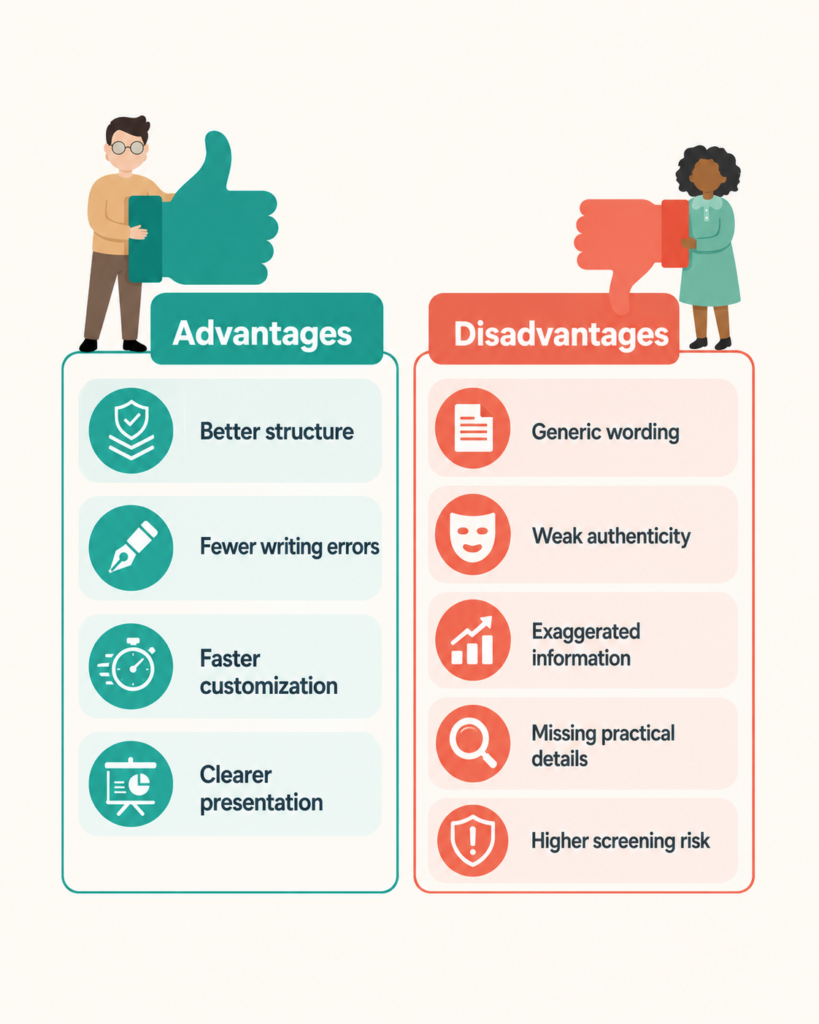
Many resumes look polished because candidates use templates and AI tools. However, a good design does not prove real skills or experience. Employers need clear details about job duties, achievements, certificates, and practical skills. A strong resume should explain what the candidate did, how long they worked, and which tools or machines they used. AI can improve structure and writing, but it may make resumes sound generic or exaggerated. Human review is still needed to confirm experience, documents, and job readiness.
What a Trustworthy Candidate Profile Should Include
A strong candidate profile should be simple, clear, and verified. It should not only repeat the resume but summarize the candidate in a way that helps the employers to make a quick decision.
| Profile Area | What to Include | Why It Matters |
| Job Role | Main position or target role | Helps employer match the candidate quickly |
| Work Experience | Years, duties, and work environment | Shows real job readiness |
| Skills | Technical and practical skills | Helps compare with job requirements |
| Certificates | Training, license, or professional documents | Supports credibility |
| Language Ability | English, Arabic, Japanese, Korean, or other language level | Important for international hiring |
| Document Status | Passport, CV, certificates, medical readiness, references | Helps avoid delays |
| Country Preference | Preferred destination or job market | Helps recruitment planning |
How to build recruitment trust before sharing a candidate
Trust leakage starts when an employer profile looks incomplete or inconsistent. A strong employer profile should present at least 5 trust signals: the same company name, logo, phone number, official email, and website across LinkedIn, Bayt, Google Business Profile, and proposal emails. Consistent employer branding improves recruitment trust and helps candidates identify genuine job opportunities [3].
A profile mirage appears when a polished resume looks impressive but does not show real experience. Strong resume quality means listing specific duties, tools, skills, and work history; for example, replace “factory worker” with “machine operation, packing, quality checking, and production-line support.” AI-written resumes may improve formatting, but recruiters should verify leadership claims, technical skills, certificates, and actual job responsibilities through human review [4].
Before sharing a candidate, recruiters should complete 3 essential checks: confirm that experience matches the job, identify whether documents such as passports, certificates, references, and medical records are ready or pending, and make sure the candidate understands the location, shift, salary range, and work conditions. This candidate screening process reduces confusion, improves hiring quality, and protects trust between employers, candidates, and recruitment agencies.
In conclusion, recruitment firms should focus on building verified candidate databases, improving resume quality, checking documents, and maintaining professional employer profiles. This creates a stronger position in a difficult job market. Agencies should also avoid overpromising. If a destination market is not open, employer demand is not verified, or documents are incomplete, the agency should communicate clearly. Trust grows when information is accurate, transparent, and easy to verify.
Sources:
Bayt.com — Company Profile Quality
https://www.bayt.com/en/employers/blog/32551/first-impressions-matter-a-stronger-company-profile-starts-with-the-basics/
Korn Ferry CEO — Resume Quality and AI-Written Resumes
https://www.kornferry.com/jp/insights/special-edition/a-resume-redux
Kelly — Jobs Haven’t Felt This Hard to Get Since 2021
https://www.kellyservices.com/need-to-know-briefing-july-6-26
Kelly — 2 Million Jobless, Six Months Running
https://www.kellyservices.com/need-to-know-briefing-july-20