Bangladesh - Greece Labour Agreement Highlights the Gap Between Workforce Demand and Actual Recruitment
GlobalRAWS Research Team
October 20, 2026
International labour agreements are often seen as an important step towards creating new employment opportunities. They establish cooperation between governments, provide legal migration pathways, and create opportunities for employers to access workers from overseas.
However, signing an agreement does not necessarily mean that workers will be recruited successfully.
The experience of Bangladesh and Greece offers a clear example. Despite a bilateral labour agreement designed to facilitate the recruitment of thousands of Bangladeshi workers, actual recruitment has remained significantly below expectations.
The situation highlights a challenge in international workforce recruitment: an agreement may establish the legal framework, but successful recruitment depends on employer participation, worker readiness, accessible visa procedures, and effective coordination.
Bangladesh–Greece Labour Agreement: Promising Targets, Limited Results
In February 2022, Bangladesh and Greece signed a bilateral labour agreement intended to create legal employment opportunities for Bangladeshi workers.
Under the agreement, Greece could recruit up to 4,000 Bangladeshi workers annually, primarily for seasonal employment in agriculture. The arrangement also included provisions for regularising eligible Bangladeshi migrants already residing in Greece.
The agreement was considered a significant development in Bangladesh’s efforts to expand overseas employment opportunities beyond traditional Middle Eastern labour markets.
However, more than four years after the agreement was signed, recruitment results remain limited.
According to an October 15, 2026, report by InfoMigrants, Bangladesh’s Ambassador to Greece, Nahida Rahman Shumona, estimated that fewer than 500 Bangladeshi workers had entered Greece legally under the agreement since it came into effect.
This figure represents only a small portion of the agreement’s potential annual recruitment capacity.
Greece Needs Workers, but Recruitment Remains Complicated
Greece continues to experience workforce shortages across several important industries.
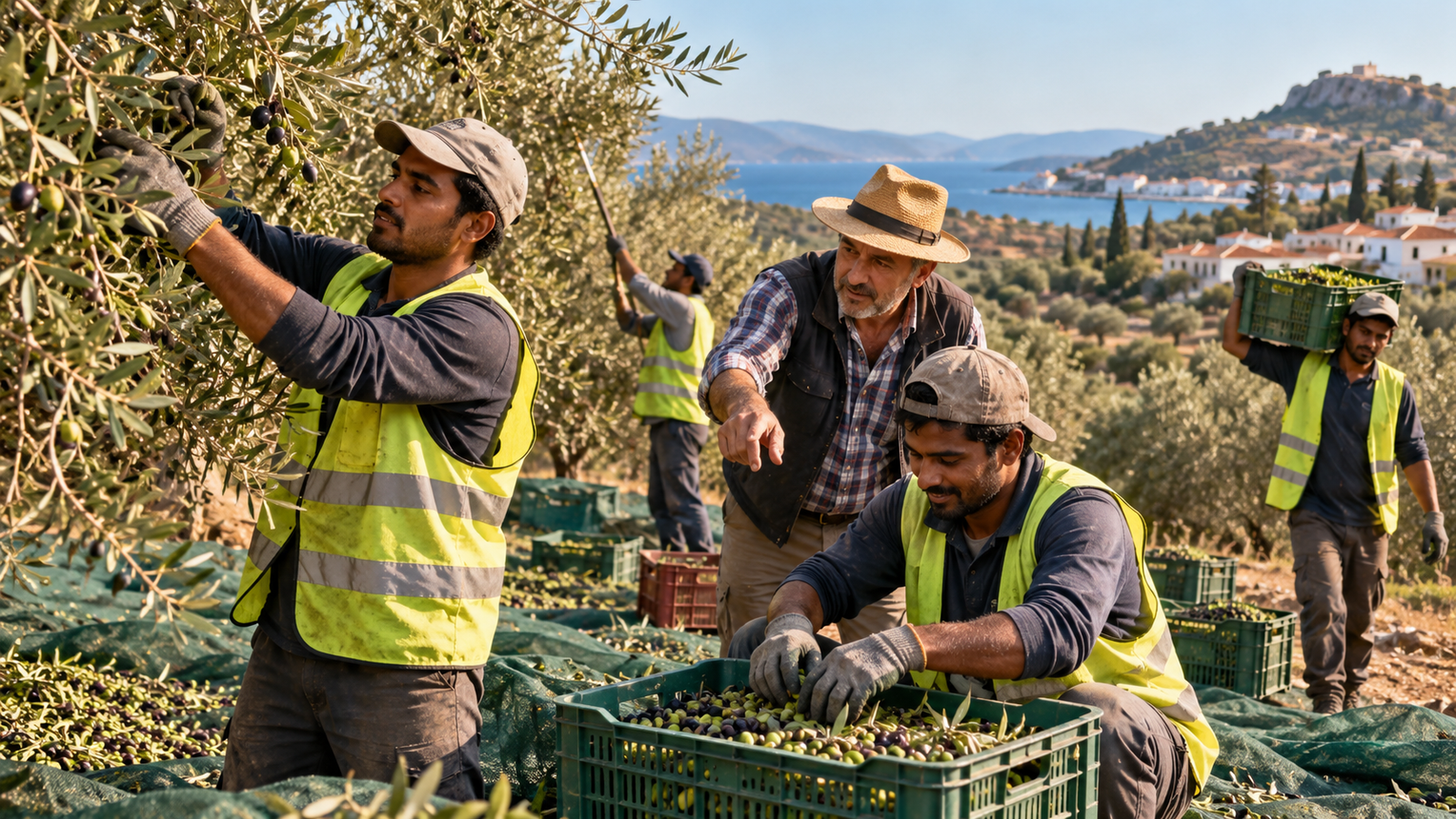
Agriculture is particularly dependent on seasonal workers during planting, harvesting, and other labour-intensive periods. Tourism, hospitality, construction, and manufacturing also face recruitment challenges.
In January 2025, Greek newspaper eKathimerini reported that the government had approved approximately 89,290 positions for third-country workers that year, reflecting significant workforce demand.
A subsequent report in January 2026 highlighted continuing recruitment difficulties, including administrative delays and lengthy visa procedures.
For employers, these delays can create serious operational challenges.
Visa Barriers Create a Gap Between Opportunity and Deployment
One of the most significant obstacles affecting recruitment under the Bangladesh–Greece agreement is the visa application process. According to InfoMigrants and reports from Bangladesh’s diplomatic representatives, Bangladeshi applicants have faced difficulties because they must travel to India for Greek visa interviews. This adds another layer of preparation, travel arrangements, documentation, and expense to an already complex recruitment process.
Some applicants have reportedly received interview invitations but could not travel to New Delhi to complete the necessary procedures. For employers, this creates uncertainty about whether selected candidates will be able to arrive on schedule. For workers, it can mean additional expenses, unpredictable processing times, and the possibility of losing an employment opportunity despite having an employer’s interest.
Bangladesh has proposed several measures to improve accessibility, including alternative document-submission arrangements, virtual interviews, and greater involvement of the government-owned Bangladesh Overseas Employment and Services Limited (BOESL).
However, as of the October 2026 reporting, these proposed changes had not been confirmed as fully implemented. The experience illustrates why visa accessibility must be considered when governments negotiate international recruitment agreements.
Employer Demand Does Not Automatically Create Successful Recruitment
Another important issue is the difference between general labour shortages and confirmed employer participation. A country may require thousands of additional workers, but international recruitment still depends on individual employers being willing and able to hire candidates from overseas.
Employers must identify their workforce requirements, prepare appropriate contracts, complete recruitment approvals, and coordinate with authorised recruitment channels. Greece’s official employment procedures require employers seeking third-country workers to provide information about vacancies, occupations, employment duration, and the individuals they intend to recruit.
Without these steps, broad labour-market demand does not automatically translate into employment opportunities for workers abroad. InfoMigrants also reported that some Greek employers, particularly in rural areas, have limited awareness of the Bangladesh–Greece recruitment arrangement or prefer to recruit through personal networks. This creates a gap between government-level cooperation and actual recruitment activity.
Worker Interest Depends on Practical Employment Conditions
Recruitment success also depends on whether prospective workers consider the available jobs suitable. An international employment opportunity involves more than obtaining a visa. Workers need to understand the salary, employment duration, living arrangements, recruitment expenses, and conditions attached to the position.
For seasonal employment, these considerations can be particularly important. A worker considering overseas employment may need to evaluate whether the expected earnings justify the costs and preparation required for a temporary assignment.
Language requirements, cultural differences, and uncertainty about recruitment timelines may also influence individual decisions. These are practical considerations rather than evidence that Bangladeshi workers are unwilling to work in Greece.
In fact, the difficulties reported under the bilateral agreement suggest that limited recruitment should not automatically be interpreted as a lack of worker interest.
Why Workforce Preparation and Recruitment Partnerships Matter
The Bangladesh–Greece experience demonstrates the importance of connecting government-level labour cooperation with practical recruitment arrangements. Governments can establish legal pathways, but employers and recruitment partners must translate those opportunities into actual employment. This requires accurate workforce demand assessments, suitable candidate sourcing, skills verification, transparent employment terms, and timely documentation.
For sectors such as agriculture, construction, manufacturing, and hospitality, recruitment partners must understand the specific skills and experience employers require. They also need to identify candidates who are genuinely interested in the available positions and prepared to comply with the destination country’s employment and immigration requirements.
Pre-departure preparation can improve this process by helping candidates understand workplace expectations, basic communication requirements, safety procedures, and contractual obligations. At the same time, employers benefit from receiving candidates whose qualifications and employment expectations have been assessed before recruitment proceeds.
Turning Labour Agreements into Real Employment Opportunities
The Bangladesh–Greece agreement remains an important example of international cooperation aimed at expanding legal labour mobility. However, its limited recruitment results show that diplomatic agreements alone cannot guarantee successful workforce deployment. Improving visa accessibility, increasing employer awareness, strengthening candidate preparation, and coordinating recruitment procedures are necessary steps towards making such agreements more effective.
The lesson extends beyond Bangladesh and Greece. As countries around the world seek solutions to workforce shortages, international recruitment arrangements must be designed around the practical needs of both employers and workers. For employers, this means access to qualified candidates within realistic recruitment timelines. For workers, it means transparent employment opportunities and accessible legal migration procedures. For recruitment partners, it means ensuring that these requirements are connected through a responsible and coordinated process.
References
- InfoMigrants, October 15, 2026
Bangladesh–Greece Labor Deal Struggles to Attract Workers - Daily Sun, October 5, 2026
Bangladesh Envoy Urges Removing Procedural Hurdles to Meet Greek Demand for Expats - The Business Standard, May 8, 2026
Beyond the Gulf: Why Labour Market Diversification Efforts Are Failing to Gain Traction - eKathimerini, January 28, 2026
Race on to Import Workers as Shortages Grow - Greece Ministry of Labour and Social Security
Work for Third-Country Nationals in Greece - bdnews24, February 9, 2022
Greece Signs Deal to Recruit 4,000 Bangladeshi Workers Every Year - International Labour Organization (ILO)
General Principles and Operational Guidelines for Fair Recruitment